Senior Living & Retiring in Puerto Vallarta: Costs, Healthcare & Real Estate (2026)

Puerto Vallarta consistently ranks among the top retirement destinations in Mexico — but "retiring here" and "senior living here" aren't the same question. If you're planning for your 60s, 70s and beyond, what matters is the day-to-day: healthcare you can reach, costs you can predict, and a home that still works when stairs and heat stop being friendly. Here's the honest picture for 2026.
What retirement actually costs in Puerto Vallarta
A couple can live comfortably in Puerto Vallarta on roughly US$2,000–US$3,000 a month, and modestly on less. That typically covers a rented or owned condo, utilities, groceries, private health insurance, dining out a few times a week and local transport. The single biggest variable is housing: a long-term rental in a central, walkable area runs about US$1,000–US$1,800/month, while owning removes that line entirely after purchase.
Property tax (predial) is a fraction of U.S. or Canadian rates — often a few hundred dollars a year — which is part of why the math works so well for fixed-income retirees.
Healthcare: the deciding factor
Puerto Vallarta has modern private hospitals (San Javier, CMQ, Joya) with English-speaking, often U.S.-trained physicians, at a fraction of U.S. prices. Many retirees carry private Mexican health insurance (a few thousand dollars a year depending on age) and keep Medicare stateside as a backup. Permanent residents can also enroll in IMSS, the public system. The key is proximity: for senior living, being within 10–15 minutes of a good hospital should drive where you buy.
Choosing a home that ages with you
This is where senior living differs from a typical vacation purchase. Look for:
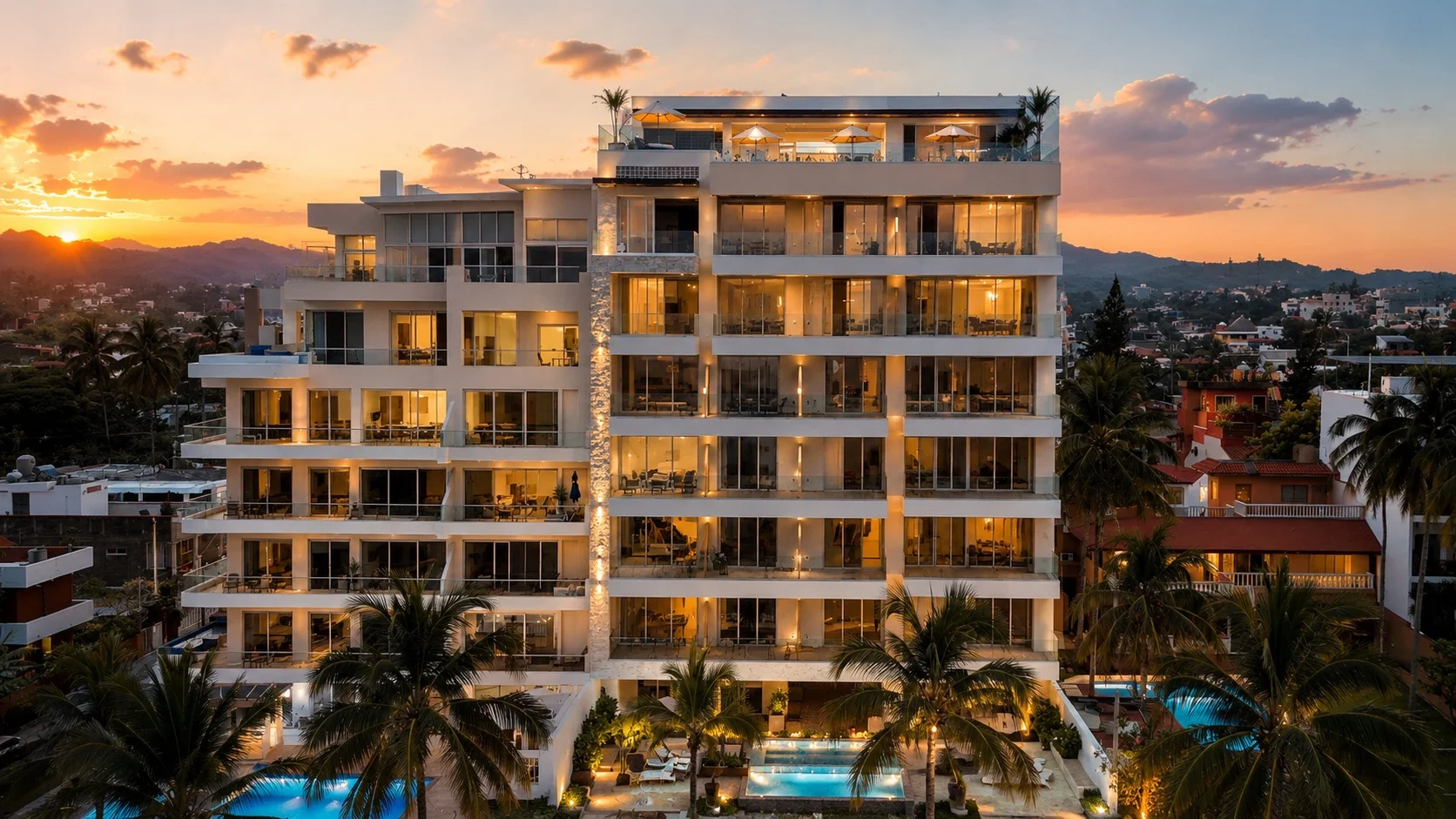
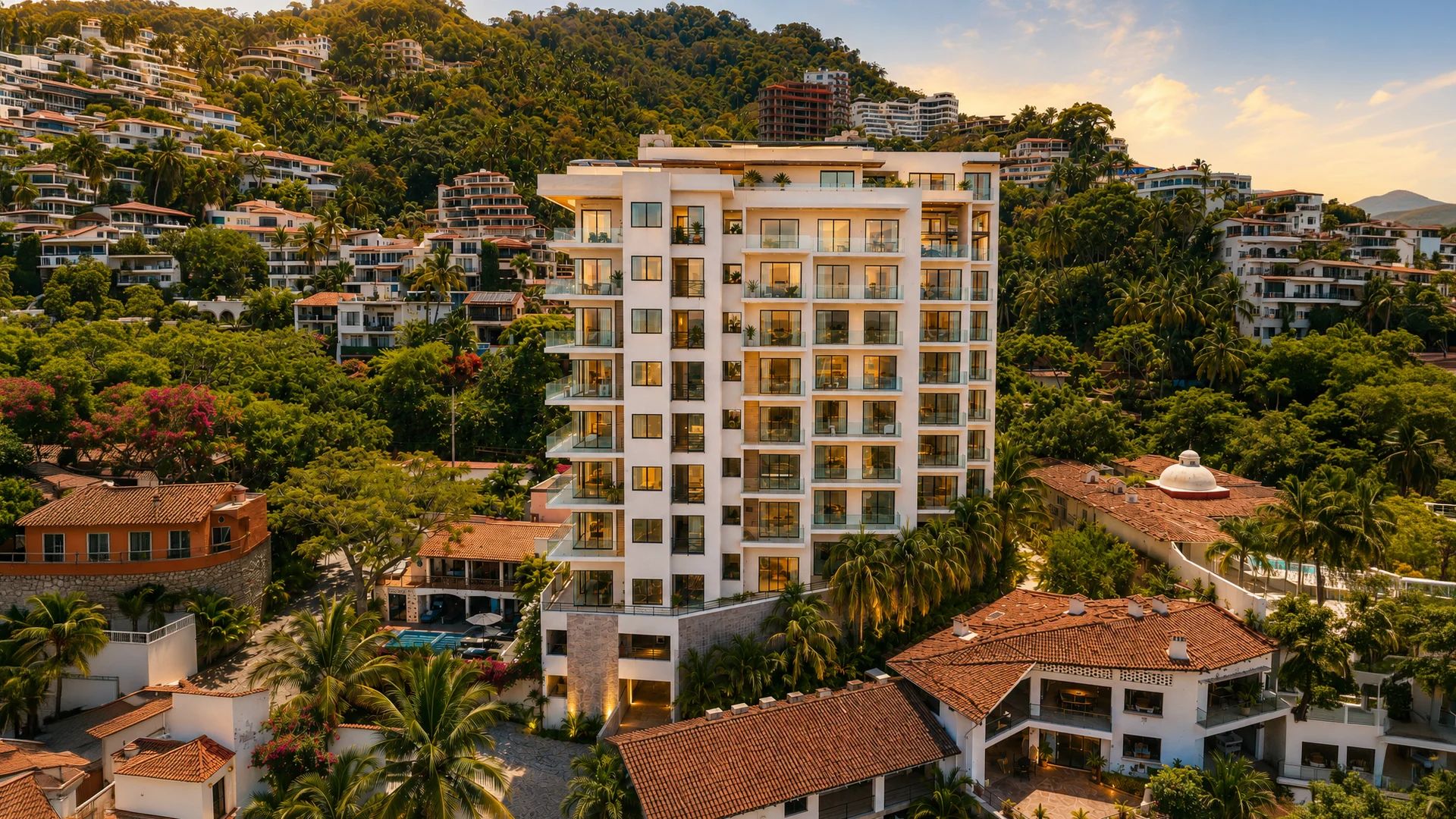
- Elevator access — Puerto Vallarta's hillside charm (Conchas Chinas, Amapas) comes with stairs. Single-level condos with elevators in Marina Vallarta, Nuevo Vallarta and the Hotel Zone are far more age-friendly.
- Flat, walkable surroundings — Nuevo Vallarta, Marina Vallarta and Bucerías offer level streets, boardwalks and services within walking distance.
- Full-service buildings — on-site management, security and maintenance matter more as you age, and they make lock-and-leave travel easy.
- Air conditioning and good ventilation — summers are hot and humid; this is a health issue, not a luxury.
Where retirees tend to land
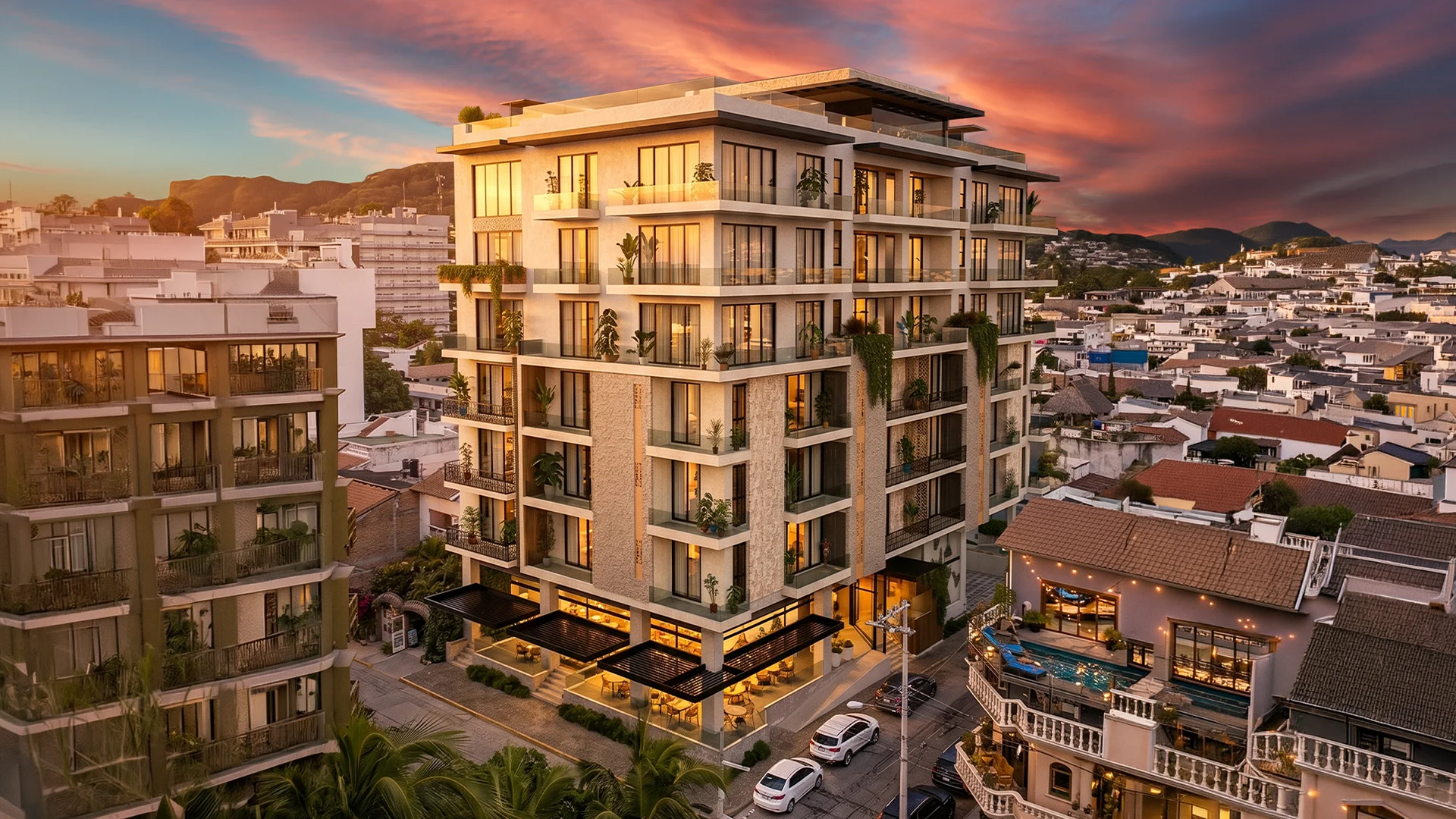
Nuevo Vallarta and Marina Vallarta are the classic picks: flat, secure, elevator buildings, close to hospitals and the airport. Bucerías draws retirees who want a walkable town feel with a large established expat community. The Romantic Zone appeals to active retirees who want to walk everywhere — though its stairs and hills suit the younger, mobile end of the range.
Residency for retirees
Most retirees enter on a Temporary Resident visa (renewable up to four years, based on income or savings) and later switch to Permanent Resident status, which has no renewal and allows IMSS enrollment. Owning property doesn't grant residency, but it strengthens your ties and simplifies long stays. A local immigration facilitator makes the process straightforward.
Thinking about a move? Browse single-level, elevator-access condos in Nuevo Vallarta or tell us your must-haves and we'll send an age-friendly shortlist.
HOMIA Developments
Discover our exclusive developments in Riviera Nayarit and Puerto Vallarta