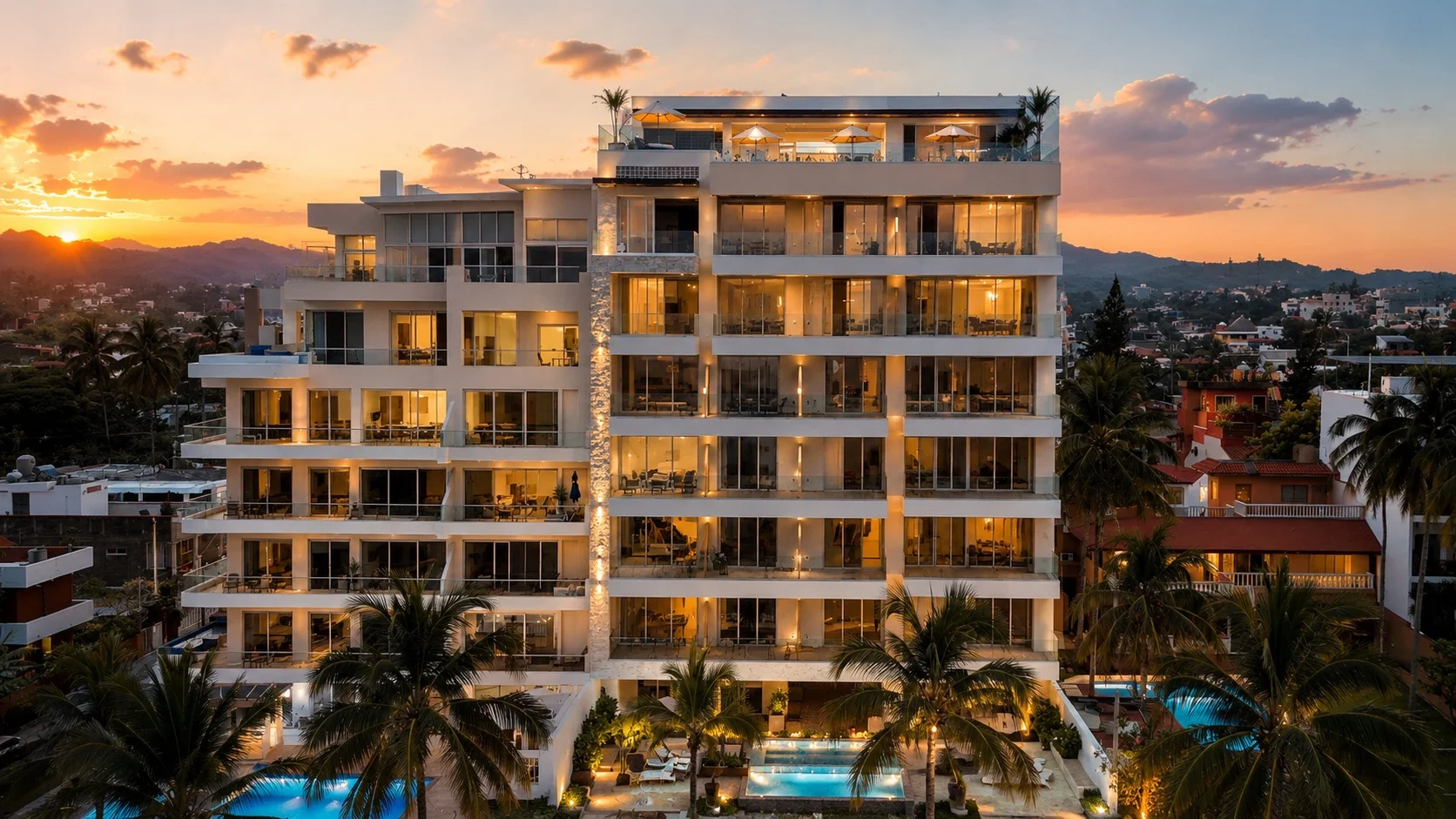
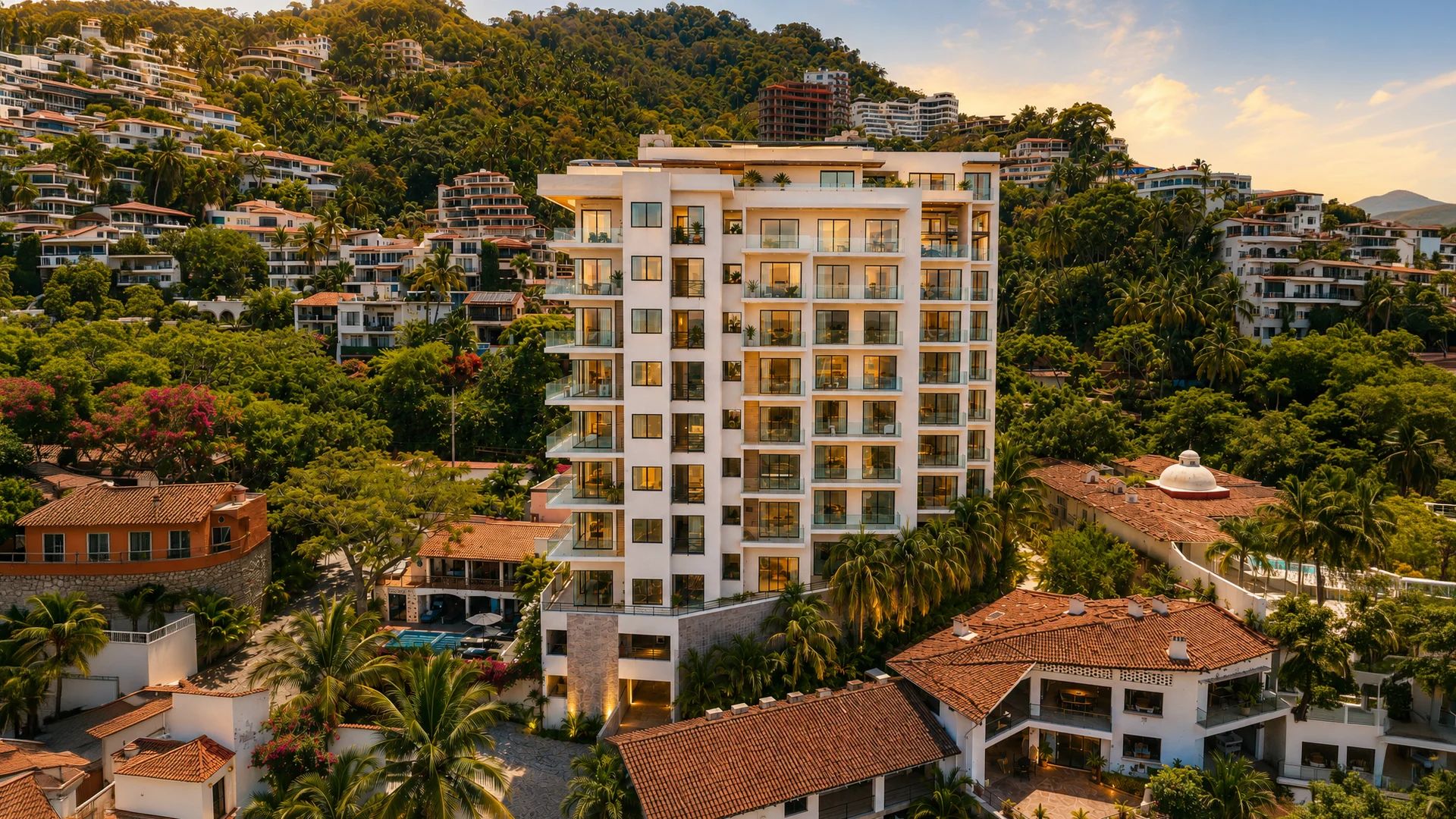
Financing Property in Mexico as a Foreigner: Mortgages, Developer Plans & Cash (2026)

Buying in Puerto Vallarta or the Riviera Nayarit is exciting, but the very first question most US and Canadian buyers ask is a practical one: how do I actually pay for this? Mexico's financing landscape works differently than back home, and knowing your options up front saves you time, money and stress. Below we break down the four real ways foreigners fund a Mexican property in 2026.
How do foreigners finance property in Mexico?
Most foreigners finance property in Mexico with cash wired from their home country, because Mexican mortgages for non-residents are limited and carry high interest rates. The four main routes are: (1) cash/wire transfer, (2) a cross-border or home-country loan such as a HELOC, (3) a Mexican peso mortgage from a bank like Intercam or CIBanco, and (4) a developer payment plan for pre-construction.
There is no single "best" method. It depends on whether you already own equity at home, how quickly you need to close, and whether you are buying a finished resale or a pre-construction unit. Many buyers combine methods, for example a large cash down payment plus a developer installment plan. Because most coastal property sits inside the restricted zone, financing also intersects with the fideicomiso (bank trust) that lets foreigners hold title, which we cover below.
Can I just pay cash for a Mexican property?
Yes, and it is by far the most common way foreigners buy in Mexico. You wire funds from your home-country bank to the notary's escrow or the seller through the closing process, converting USD or CAD to pesos (or paying in USD by agreement). Cash purchases close faster, avoid interest entirely, and often give you stronger negotiating power on price.
Practical notes for a cash purchase:
- Use the notario (notary public): In Mexico the notary is a government-appointed lawyer who verifies title, handles the fideicomiso and records the deed. Never wire money directly to a private seller before the notary process is set up.
- Budget for closing costs: These typically run 5-8% of the purchase price on top of the price itself. See our full breakdown of closing costs in Puerto Vallarta.
- Currency timing matters: Moving large sums means watching the USD/MXN exchange rate. Many buyers use a specialized FX service rather than a standard bank wire to get a better rate.
Can I use a US HELOC or home-country loan to buy in Mexico?
Yes, and many buyers do. Rather than borrowing in Mexico, they tap equity in their US or Canadian home through a HELOC (home equity line of credit), cash-out refinance, or a portfolio/securities-backed loan, then wire the proceeds to Mexico as cash. To the Mexican seller and notary, this simply looks like a cash purchase.
Why this route is popular:
- Lower rates: US and Canadian home-equity rates are usually far below Mexican mortgage rates.
- Faster and simpler: You qualify with a lender you already know, in your own language and currency.
- No Mexican property lien: The debt stays attached to your home-country asset, keeping the Mexican closing clean.
There are also a handful of specialized cross-border lenders that finance Mexican real estate for Americans and Canadians in USD. These exist but are niche, require solid documentation, and tend to have higher rates and fees than a domestic HELOC. Always compare the all-in cost.
Can foreigners get a mortgage from a Mexican bank?
Yes, but it is less common and more expensive than financing back home. A few Mexican institutions, notably Intercam and CIBanco, offer peso-denominated mortgages to qualifying foreigners. As of 2026, interest rates are approximately in the low-to-mid teens (much higher than US/Canadian rates), terms usually run up to 15-20 years, and lenders typically expect a down payment of around 20-30% or more.
Typical requirements for a foreigner applying for a Mexican peso mortgage include:
- Proof of stable income and employment or business ownership
- Good credit history (often reviewed from your home country plus any Mexican credit)
- Valid passport and immigration status documentation
- Bank statements and tax returns, usually translated
- An appraisal (avalúo) of the property and life/property insurance
Because rates and terms shift with Banco de México's policy rate, always confirm current numbers directly with the bank. You can track the reference rate and inflation context at the Banco de México. For most buyers, a home-country loan beats a Mexican mortgage on cost, but a peso mortgage can make sense if you have Mexican income or want to keep your assets abroad untouched.
Can I finance pre-construction with a developer payment plan?
Yes, and in Puerto Vallarta and the Riviera Nayarit this is one of the most popular and accessible ways to buy. Developers commonly offer interest-free payment plans during construction: you put down roughly 20-50% and pay the balance in installments up to delivery. No bank, no credit check, no interest, just a schedule tied to construction milestones.
How a typical developer plan works:
- Reservation: A small deposit locks your unit and price.
- Down payment: Usually 20-50% due at contract signing.
- Installments during construction: Monthly or milestone-based payments spread over the build period (often 12-36 months).
- Balance at delivery: A final payment when the unit is finished and titled, which many buyers cover with cash, a HELOC, or the sale of another asset.
The upside is real: you buy at pre-construction (lower) pricing, spread payments over time, and pay no interest. The trade-off is developer risk, so buy from established builders with a delivery track record and make sure the fideicomiso and contracts are properly structured through the notary. Browse current pre-construction and finished properties in Puerto Vallarta and Riviera Nayarit to see which developments offer plans.
How does the fideicomiso affect financing?
The fideicomiso is the bank trust that lets foreigners legally hold coastal property inside Mexico's restricted zone, and it sits alongside your financing rather than replacing it. However you pay, cash, HELOC, Mexican mortgage, or developer plan, the title is held in a trust with a Mexican bank as trustee while you keep all ownership rights: use, rent, sell, and inherit.
Key points where financing and the fideicomiso meet:
- The trust is set up during closing, handled by the notary, and carries a setup fee plus modest annual fees.
- A Mexican mortgage lender will place its lien within or alongside the trust structure.
- With a developer plan, title typically transfers into your fideicomiso at delivery when you make the final payment.
For the full picture on ownership, read can foreigners buy property in Mexico.
Which financing option is right for you?
If you have cash or home equity, wiring funds (directly or via a HELOC) is usually the cheapest and fastest path. If you are buying pre-construction, a developer payment plan lets you spread cost interest-free while prices are lowest. A Mexican peso mortgage is the fallback when you want to finance locally, especially with Mexican income, and are comfortable with higher rates. Whatever you choose, work with a notary and an experienced agent so the money, the title, and the fideicomiso all line up cleanly.
Ready to explore your options? The HOMIA team can walk you through developer plans, connect you with cross-border lenders and FX services, and match you to the right property. Contact HOMIA today for a no-pressure conversation about financing your Puerto Vallarta or Riviera Nayarit home.
HOMIA Developments
Discover our exclusive developments in Riviera Nayarit and Puerto Vallarta